
Takht-i-Bahi is one of the most important Buddhist archaeological sites in Pakistan and a UNESCO World Heritage Site. Located on a hilltop overlooking the plains of Mardan, the monastery complex dates back to the early centuries of the Common Era and was once an active center of Buddhist learning and worship in the ancient Gandhara region.
Unlike many sites that were lost or heavily damaged over time, Takht-i-Bahi remains remarkably well preserved. Its elevated position protected it from invasions and flooding, allowing visitors today to clearly understand how a Buddhist monastic complex functioned nearly two thousand years ago. The site offers not just historical value, but also a quiet, contemplative atmosphere that sets it apart from busier tourist locations.

History & Evolution of Takht-i-Bahi
Takht-i-Bahi was established around the 1st century AD, during a period when Buddhism was flourishing across Gandhara. The monastery remained active for several centuries, with evidence of use until around the 7th century AD.
The complex was built on a hilltop, a deliberate choice by Buddhist monks. Elevated locations offered isolation from urban life, a peaceful environment for meditation, and protection from conflict in the plains below. Over time, the monastery expanded into a carefully planned complex that included stupas, meditation cells, assembly halls, and communal spaces.
Historical studies link the decline of many Gandhara Buddhist monasteries, including Takht-i-Bahi, to waves of invasions in the region during the 5th century AD, particularly by Central Asian groups. Despite this, the site was spared total destruction and was gradually abandoned rather than violently destroyed.
Centuries later, Takht-i-Bahi was rediscovered and systematically excavated during the British period. Its preservation and historical importance led to its recognition as a UNESCO World Heritage Site in 1980.
It is believed and confirmed by local guides that 30% of the excavation at this heritage site has been done by the British Government and 10% by the Government of Pakistan. The remaining 60% of the area is still unexcavated, and the Government of Pakistan is actively working on it.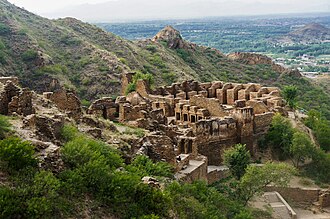
What to See & Experience at Takht-i-Bahi
Takht-i-Bahi is laid out in clearly defined sections, making it easy for visitors to understand its purpose and flow.
Key areas to explore include:
- Stupa Court
A central courtyard containing numerous small stupas, once used as commemorative and devotional structures. - Main Stupa Platform
Designed for ritual walking (circumambulation), this area highlights how worship was physically practiced. - Monastic Cells
Small rooms arranged around courtyards where Buddhist monks lived, studied, and meditated. - Assembly & Communal Areas
Larger halls believed to be used for gatherings, teaching, and daily activities.
Walking through the Takht-i-Bahi monastery ruins offers a slow, reflective experience. The stone pathways, elevated views, and quiet surroundings make it ideal for photography, thoughtful exploration, and moments of silence.

Entry & Access Information
- Access point: Via Mardan, Khyber Pakhtunkhwa
- Islamabad to Takht-i-Bahi distance: Approximately 160–170 km by road
- Distance from Mardan city: About 15 km
- Average visit duration: 2–3 hours
🎟 Entry Ticket
- Local visitors: PKR 50–100, depending on season
- Foreign visitors: PKR 500–1,000 (approximately USD 2–4)
Ticket prices may vary slightly during peak seasons or holidays.
The final approach to the Takht-i-Bahi site involves a short uphill walk. The path is well-defined, but comfortable walking shoes are recommended.
Weather & Best Time to Visit
The weather around Takht-i-Bahi reflects the climate of lower Khyber Pakhtunkhwa, with some exposure due to its elevated position.
- Spring: Pleasant temperatures, clear views
- Summer: Hot during midday; early mornings recommended
- Autumn: Ideal weather, soft light for photography
- Winter: Cooler but generally accessible
There is limited shade at the Takht-i-Bahi monastery, so sun protection is important, especially outside winter months.
6. Visitor Tips
- Visit early in the day to avoid heat and crowds
- Wear sturdy footwear for stone pathways
- Carry water, especially in warmer months
- Take time to move slowly; this heritage site rewards patience
Respect the quiet nature of the ruins
Environmental & Cultural Awareness
Takht-i-Bahi is a protected Buddhist heritage site in Pakistan and a place of religious significance.
Visitors are encouraged to:
- Avoid touching or climbing on structures
- Carry back all waste
- Keep noise levels low
- Respect the historical and spiritual context of the site
Preserving the Takht-i-Bahi Buddhist monastery ensures its legacy for future generations.

